Partnership vs. LLC
When two or more people launch a business together in Minnesota, they often naturally refer to each other as "partners" and their business as a "partnership." While this makes sense in everyday conversation, it can lead to legal misunderstandings. In the eyes of Minnesota law, a Partnership and a Limited Liability Company (LLC) are entirely different legal entities with vastly different liability protections.
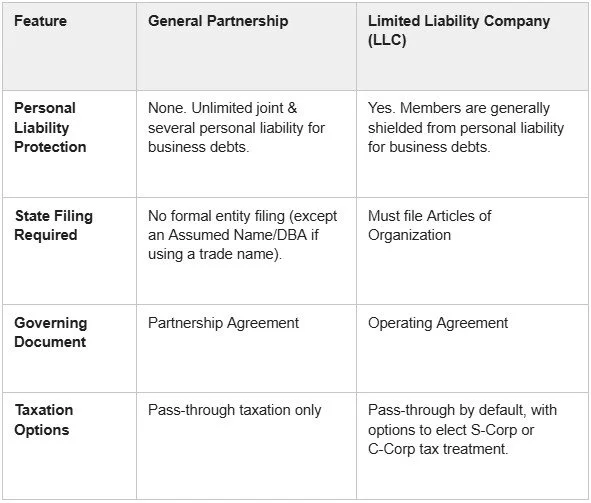
Here is a breakdown of the key differences:
The General Partnership. Under the Minnesota Uniform Partnership Act (Minnesota Statutes Chapter 323A), a partnership is formed automatically whenever two or more individuals co-own a business for profit—even if you have never signed a single piece of formal paperwork. However, this convenience comes with legal exposure of joint and several liability. This means that each partner is personally responsible for all of the partnership’s debts, liabilities, and legal obligations. If the business defaults on a loan or loses a lawsuit, creditors can legally pursue your personal bank accounts, home, and assets to satisfy the debt.
The LLC. Under the Minnesota Revised Uniform Limited Liability Company Act (Minnesota Statutes Chapter 322C), an LLC creates a distinct, separate legal entity. By law, the owners (called "members") possess a personal liability shield. This means that absent personal guarantees or explicit personal misconduct, your personal assets remain insulated from the debts, liabilities, or lawsuits facing the business.